
Corporate treasury bitcoin adoption limits to account for
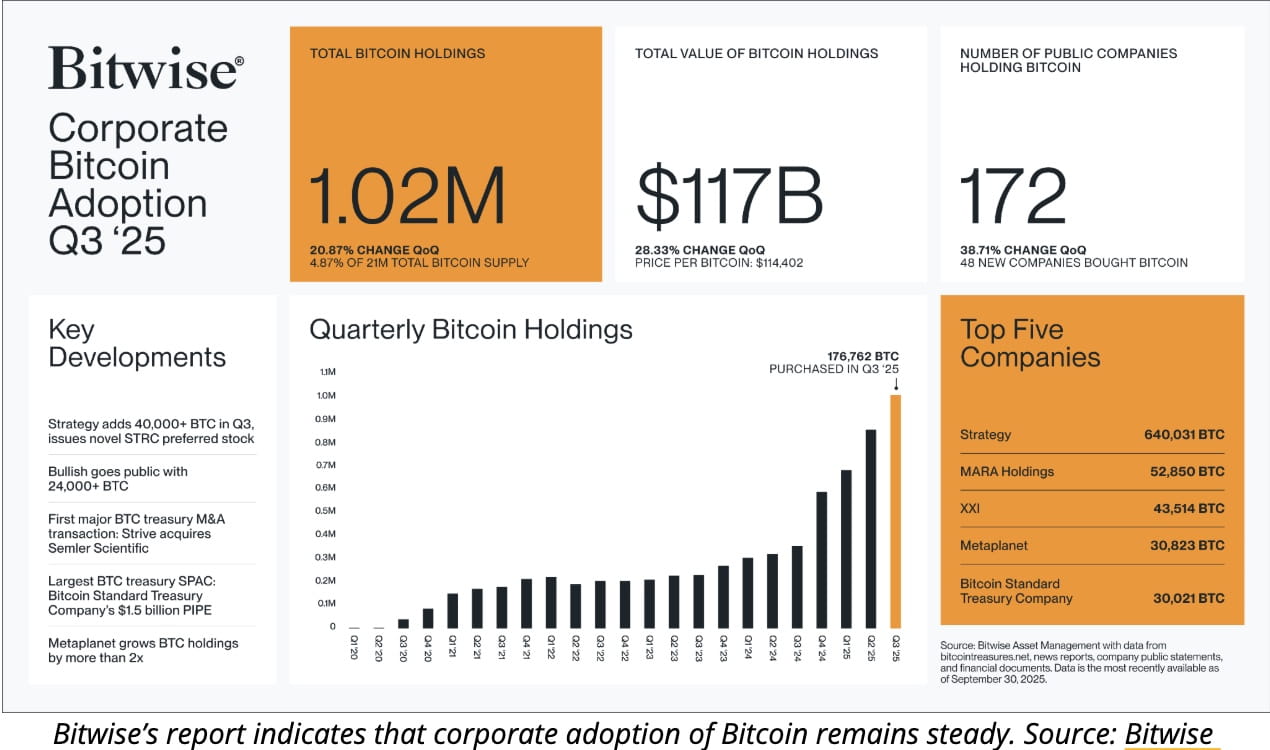
The shift toward holding Bitcoin as a primary treasury reserve asset is no longer theoretical. By 2026, over 150 public companies have integrated digital assets into their balance sheets, moving beyond speculative positions to strategic reserves. This trend reflects a broader recognition of Bitcoin’s potential to hedge against currency debasement and inflation, particularly in an era of expansive monetary policy.
However, adoption is not without its constraints. Companies face significant hurdles, including regulatory uncertainty, price volatility, and the need for robust custody solutions. These challenges require careful consideration and strategic planning to mitigate risks effectively.
Key limits to account for
-
Regulatory Uncertainty: The evolving regulatory landscape creates ambiguity for companies seeking to hold Bitcoin. Lack of clear guidelines can deter adoption, especially in jurisdictions with strict financial regulations.
-
Price Volatility: Bitcoin’s inherent volatility poses a risk to treasury stability. Companies must develop strategies to manage price fluctuations, such as hedging or diversification.
-
Custody Solutions: Secure storage of Bitcoin is critical. Companies must choose between self-custody (with its technical complexities) and third-party custodians (with associated costs and risks).
Tradeoffs by Use Case
-
Hedging Against Inflation: Bitcoin’s fixed supply makes it an attractive hedge against inflation. However, its volatility can offset gains if not managed properly.
-
Liquidity Management: While Bitcoin is liquid, converting large positions to fiat can impact market prices. Companies must balance liquidity needs with market impact.
-
Brand and Reputation: Holding Bitcoin can enhance a company’s reputation as innovative and forward-thinking. However, it may also attract scrutiny from conservative stakeholders.
Decision Framework
When considering Bitcoin as a treasury asset, companies should evaluate their risk tolerance, regulatory environment, and operational capabilities. A phased approach, starting with small allocations and gradually increasing exposure, can help mitigate risks. Additionally, partnering with reputable custodians and staying informed about regulatory developments is essential for long-term success.
Corporate treasury bitcoin adoption choices that change the plan
Holding Bitcoin as a primary treasury reserve asset is no longer a speculative novelty; it is a structural balance sheet decision with distinct operational and financial implications. Companies like Strategy and MicroStrategy have demonstrated that Bitcoin can serve as a high-conviction store of value, but it requires a different risk framework than traditional cash or bond holdings.
The decision to allocate corporate capital to Bitcoin hinges on three primary tradeoffs: volatility exposure, liquidity management, and accounting treatment. While Bitcoin offers potential upside against inflation and currency debasement, it introduces significant short-term balance sheet volatility that can impact earnings per share and credit ratings. Companies must weigh this against the opportunity cost of holding non-yielding assets.
The following comparison breaks down how Bitcoin treasury strategies compare to traditional cash reserves and diversified equity portfolios across key operational metrics.
| Metric | Bitcoin Treasury | Cash & Equivalents | Diversified Equity |
|---|---|---|---|
| Volatility | High (30-80% annualized) | Near Zero | Moderate (15-25% annualized) |
| Yield | None (0%) | Low (3-5%) | Moderate (1-3% dividend) |
| Liquidity | High (24/7 global markets) | Instant | High (market hours) |
| Inflation Hedge | Strong (fixed supply) | None (erodes value) | Partial (growth-dependent) |
| Accounting Impact | Mark-to-market gains/losses | Stable book value | Mark-to-market fluctuations |
Volatility and Balance Sheet Stability
Bitcoin’s price swings are significantly larger than traditional assets. A 20% drop in Bitcoin’s price can immediately reduce a company’s book value, potentially triggering covenant breaches or affecting investor sentiment. Companies must maintain sufficient cash buffers to manage this volatility without forcing asset sales at inopportune times.
Liquidity and Capital Deployment
Unlike real estate or private equity, Bitcoin can be bought or sold instantly across global exchanges 24/7. This liquidity allows companies to deploy capital efficiently, but it also lowers the friction for impulsive selling during market stress. Treasury teams must establish strict trading protocols to prevent emotional decision-making.
Opportunity Cost and Yield
Bitcoin generates no cash flow. While holding cash in high-interest environments yields 3-5%, Bitcoin relies entirely on price appreciation. This means companies must be comfortable with a period of negative carry, where the cost of capital exceeds the asset’s yield, betting on long-term value preservation rather than immediate income.
Strategic Fit and Decision Framework
Choosing a Bitcoin treasury strategy is not one-size-fits-all. It suits companies with stable cash flows, long-term horizons, and leadership that understands crypto markets. For firms with high debt loads or strict liquidity requirements, the volatility may outweigh the benefits.
Ultimately, the tradeoff is between stability and asymmetric upside. Companies adopting Bitcoin are essentially trading short-term earnings stability for long-term potential appreciation, accepting that their balance sheet will look very different in a bull market versus a bear market.
Choose the next step
Why 150+ Public Companies Are Now Holding Bitcoin as a Primary Treasury Reserve Asset works best as a clear sequence: define the constraint, compare the realistic options, test the tradeoff, and choose the path with the fewest hidden costs. That order keeps the advice usable instead of decorative. After each step, pause long enough to check whether the recommendation still fits the reader's actual situation. If it depends on perfect timing, unusual access, or a best-case budget, include a simpler fallback.

Spotting Misleading Claims and Weak Options
Treasury teams evaluating Bitcoin face a crowded market of advisory reports and vendor pitches. Distinguishing signal from noise requires checking three specific areas: accounting treatment, liquidity mechanics, and regulatory exposure.
Accounting and Audit Risks
The most common misleading claim involves overstating the stability of Bitcoin’s role as a reserve asset. While holding Bitcoin offers inflation hedging, it introduces significant volatility to balance sheets. Companies must account for mark-to-market adjustments under ASC 350-60, which can create massive swings in reported earnings. If a company claims Bitcoin is a "stable" treasury tool without addressing these accounting impacts, the claim is weak.
Liquidity and Custody Traps
Another frequent pitfall is ignoring the liquidity costs of large positions. Unlike cash or short-term treasuries, Bitcoin cannot be liquidated instantly without impacting price. Proposals that suggest deploying 10% or more of treasury cash into Bitcoin without a detailed exit strategy are risky. Ensure the custody solution offers institutional-grade insurance and clear withdrawal protocols. If the proposal relies on a single custodian with no backup, it is a critical failure point.
Regulatory and Tax Ambiguity
Tax treatment varies by jurisdiction and corporate structure. Some advisors suggest Bitcoin is a tax-neutral asset, which is incorrect. In the US, it is treated as property, triggering capital gains events on every sale or exchange. Misunderstanding this can lead to unexpected tax liabilities. Always verify the tax implications with a specialist familiar with digital assets before committing treasury funds.
The Decision Framework
When comparing Bitcoin to traditional treasury instruments, focus on the tradeoffs. Bitcoin offers potential upside but demands active risk management. Traditional assets offer stability but lose purchasing power to inflation. The decision should hinge on your company’s risk tolerance and time horizon. If you cannot withstand a 50% drop in treasury value, Bitcoin is not the right fit.
No comments yet. Be the first to share your thoughts!