On-chain treasuries 2026 limits to account for
By 2026, the question is no longer whether large corporations will hold Bitcoin and Ethereum, but how they manage the regulatory and liquidity constraints of on-chain treasuries. The shift from speculative holding to operational balance sheet management has created a new set of requirements for S&P 500 finance teams.
The primary constraint is not technological but compliance. Treasury departments must now navigate a fragmented landscape of tokenized U.S. Treasuries and stablecoins, where settlement finality occurs in seconds rather than days. This speed introduces new risks around counterparty exposure and smart contract vulnerability that were previously nonexistent in traditional banking channels.
According to industry analyses from platforms like RWA.xyz, the volume of tokenized government debt has grown significantly, offering a bridge between traditional liquidity and blockchain efficiency. However, integrating these assets requires robust audit trails and real-time reporting capabilities that legacy ERP systems often lack. Companies are now building hybrid infrastructure to monitor on-chain positions alongside traditional cash balances.
For treasury officers, the 2026 constraint is about visibility and control. Holding Bitcoin or Ethereum on-chain means owning the private keys and bearing the security responsibility, unlike custodial bank accounts. This shift demands a new skill set focused on digital asset security, regulatory reporting, and liquidity management across both centralized and decentralized finance (DeFi) protocols.
The decision to adopt on-chain treasuries 2026 strategies hinges on whether the benefits of 24/7 settlement and programmable liquidity outweigh the costs of compliance and security infrastructure. As major institutions begin to standardize these practices, the constraint is shifting from "if" to "how well."
On-chain treasuries 2026 choices that change the plan
Moving corporate reserves onto a blockchain offers speed and programmability, but it introduces distinct operational risks that replace traditional banking frictions. In 2026, the tradeoff is no longer just about yield; it is about custody, compliance, and liquidity depth. Treasurers must evaluate which digital assets and settlement layers actually serve their balance sheet needs without exposing the firm to unnecessary technical debt or regulatory ambiguity.
The market has matured beyond speculative experimentation. Platforms like RWA.xyz now manage over $10 billion in tokenized U.S. Treasuries, offering yields that track the federal funds rate with near-instant settlement. This scale provides the liquidity depth required for large-cap operations, but it also demands rigorous scrutiny of the underlying smart contract audits and the legal wrappers that back the tokens.
To navigate this, compare the core tradeoffs across three critical dimensions: settlement speed, custody security, and regulatory clarity. The following table breaks down these factors to help you decide if on-chain treasury management fits your current infrastructure.
| Factor | On-Chain (BTC/ETH/RWA) | Traditional Banking | Key Tradeoff |
|---|---|---|---|
| Settlement | 24/7, minutes to seconds | T+1 to T+2 business days | Speed vs. operational risk |
| Custody | Self-custody or multi-sig | Bank vaults and clearinghouses | Control vs. insurance gaps |
| Regulatory | Evolving, jurisdiction-dependent | Established, FDIC/SIPC | Flexibility vs. legal certainty |
| Liquidity | Deep for BTC/ETH, growing for RWAs | High for cash, low for private assets | Access vs. market depth |
| Cost | Network fees + custody fees | Wire fees + spread | Transaction cost vs. administrative overhead |
Bitcoin and Ethereum remain the primary collateral assets for on-chain treasuries due to their deep liquidity and established security models. However, the rise of tokenized real-world assets (RWAs) like U.S. Treasury bills offers a more familiar yield profile. The choice depends on whether you prioritize the upside potential of digital assets or the stability of government-backed instruments.
For a deeper look at market dynamics, consider the current technical setup of Bitcoin, which often leads broader crypto market trends.
Build a treasury decision framework
Treasury teams are moving from passive custody to active on-chain management. This shift requires a structured approach that balances yield generation with strict compliance and security controls. The following steps outline how to evaluate, select, and implement digital asset holdings for corporate balance sheets.
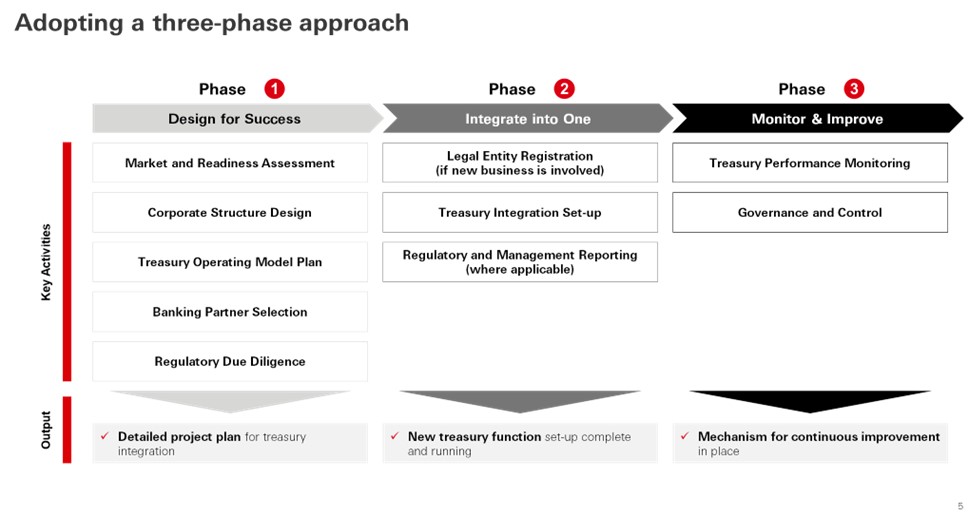
Before allocating capital, verify that your chosen custodian meets institutional-grade security standards. Look for SOC 1 Type II and SOC 2 Type II certifications, as well as clear insurance coverage for digital assets. Ensure the custodian supports multi-signature wallets and hardware security modules (HSMs) to prevent unauthorized access. Compliance with local securities laws and tax reporting requirements is non-negotiable for S&P 500 entities.

Compare yield opportunities across Bitcoin and Ethereum ecosystems. Bitcoin offers limited native yield, often relying on lending protocols or staking derivatives, which introduces counterparty risk. Ethereum provides more robust options through staking and tokenized real-world assets (RWA), such as tokenized U.S. Treasuries. Assess the liquidity depth of these instruments to ensure you can exit positions without significant slippage during market volatility.

Seamless integration with your Enterprise Resource Planning (ERP) system is critical for accurate financial reporting. Choose platforms that offer API connectivity to automatically sync on-chain transactions with your general ledger. This ensures real-time visibility into asset valuations and simplifies audit trails. Verify that the solution supports GAAP or IFRS compliance for digital asset accounting, including fair value measurements and impairment testing.
Establish clear thresholds for portfolio allocation, typically between 1% and 5% of total assets. Set automatic rebalancing triggers to maintain target allocations as asset prices fluctuate. Implement stop-loss mechanisms to limit downside exposure. Regularly review and stress-test these parameters against historical market events, such as the 2022 crypto crash, to ensure your treasury remains resilient during extreme market conditions.
Watchouts: Weak Options and Misleading Claims
Treasury teams evaluating on-chain Bitcoin and Ethereum must separate viable infrastructure from marketing noise. Several common pitfalls can distort risk assessments or lead to operational failures.
The Stablecoin Illusion
Many reports highlight tokenized U.S. Treasuries as the primary on-chain asset class. While useful for liquidity, these are not Bitcoin or Ethereum. They represent a different risk profile entirely. Assuming tokenized debt substitutes for crypto treasury diversification is a fundamental error.
Custody Gaps
Some providers claim "institutional-grade" security without specifying key management structures. If a provider uses multi-signature wallets without independent audit trails, the risk remains high. Verify that private keys are stored in hardware security modules (HSMs) with strict access controls.
Liquidity Traps
On-chain assets can appear liquid but face slippage during market stress. Ethereum layer-2 solutions may have lower depth than mainnet. Ensure your treasury strategy accounts for exit costs, not just entry prices.
Regulatory Ambiguity
Treasury compliance requires clear audit trails. Some on-chain transactions lack the metadata needed for SOX compliance. Choose providers that offer detailed transaction reporting compatible with traditional accounting standards.
No comments yet. Be the first to share your thoughts!