What on-chain treasuries actually are
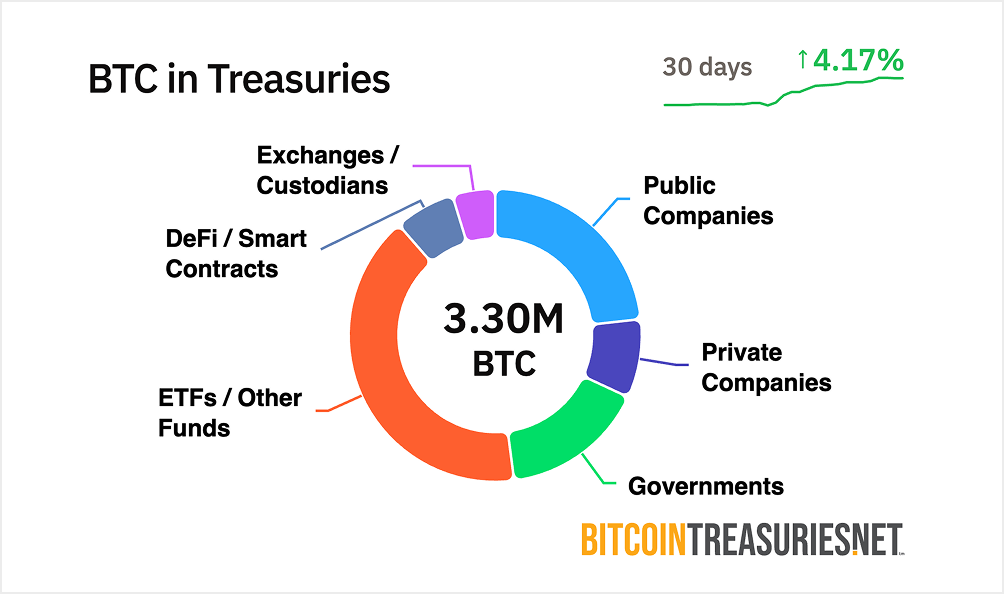
An on-chain treasury is a corporate balance sheet managed directly on a blockchain, using smart contracts to automate cash management. It is not simply a company holding Bitcoin or Ethereum as a speculative asset. Instead, it refers to the use of tokenized real-world assets (RWAs)—primarily U.S. government debt—to generate yield while maintaining the transparency and programmability of blockchain technology.
The core of this strategy lies in tokenized U.S. Treasuries. These are digital representations of T-bills and notes issued by the U.S. Department of the Treasury. By converting these traditional bonds into on-chain tokens, corporations can access the "risk-free" yield of government debt without the friction of traditional banking intermediaries. This allows treasury departments to park excess cash in instruments that are both highly liquid and compliant with regulatory standards.
Smart contracts play a critical role in this structure. They automate the settlement, interest payment, and maturity processes of these tokenized assets. This reduces operational overhead and eliminates the need for manual reconciliation between traditional financial institutions and corporate accounting systems. The result is a treasury function that operates with the speed of digital finance but the stability of sovereign debt.
Transparency is another defining feature. All transactions are recorded on the blockchain, providing an immutable audit trail. This level of visibility allows CFOs and auditors to verify cash positions in real time, reducing the risk of errors or fraud. As the technology matures, on-chain treasuries are becoming a standard tool for corporate liquidity management, bridging the gap between traditional finance and decentralized infrastructure.
Why 2026 marks the institutional inflection point
Corporate treasuries are moving past the experimental phase. In 2026, on-chain treasury management shifts from isolated pilots to mainstream adoption. This transition is driven by three converging forces: regulatory clarity, mature infrastructure, and the need for yield in a higher-for-longer rate environment.
Regulatory frameworks have matured enough to reduce compliance uncertainty. Major financial centers now provide clear guidelines for digital asset custody and reporting. This clarity allows corporate CFOs to integrate crypto assets into traditional treasury operations without fearing sudden regulatory reversals.
Infrastructure improvements have solved previous reliability issues. Platforms like Chainlink now provide the secure, real-time data feeds and interoperability required for institutional-grade operations. Smart contracts can execute complex treasury strategies with the same reliability as traditional banking systems. This technical maturity removes the primary barrier to entry for large corporations.
The economic case is stronger than ever. With interest rates remaining elevated, the opportunity cost of holding idle cash has increased. On-chain treasuries offer access to decentralized finance yields that often outperform traditional money market funds. This efficiency gain is not just theoretical; it is becoming a standard part of corporate financial strategy.
The combination of these factors creates a tipping point. Companies that delay adoption risk falling behind peers who are already optimizing their capital efficiency through digital assets. The infrastructure is ready, the regulations are clear, and the financial incentives are undeniable.
Leading on-chain treasury platforms
The infrastructure for on-chain treasuries has matured from experimental pilots to institutional-grade rails. Three providers currently define the landscape, each solving a specific bottleneck: Ondo Finance prioritizes instant settlement and regulatory clarity, Backed Finance focuses on broad asset replication, and TruBILL targets high-speed execution on Solana.
Choosing the right platform depends on whether your treasury needs immediate liquidity, access to non-crypto assets, or minimal transaction friction. The table below compares their core technical and operational differences.
| Platform | Primary Asset | Blockchain | Settlement Speed | Best Use Case |
|---|---|---|---|---|
| Ondo Finance | US Treasuries (OUSG) | Ethereum | Instant mints/redemptions | Institutional yield with regulatory compliance |
| Backed Finance | Tokenized Stocks/Bonds | Multi-chain (EVM/Solana) | Near-instant | Exposure to traditional equities and bonds |
| TruBILL | US Treasury Bills | Solana | Sub-second | High-frequency trading and micro-yield |
Ondo Finance has established itself as the standard for regulated tokenized Treasuries on Ethereum. Its OUSG product allows for instant mints and redemptions, a critical feature for corporate treasuries that need to move cash between traditional banking rails and DeFi protocols without waiting days for settlement. This immediacy turns static treasury holdings into active capital.
Backed Finance takes a different approach by creating ERC-20 tokens that track real-world assets like Apple stock or German bunds. This is less about Treasury bills and more about broadening the treasury's investment universe. By backing these tokens 1:1 with the underlying asset, Backed allows companies to hold diversified positions directly on-chain, bypassing traditional custodians.
TruBILL focuses on the Solana ecosystem, leveraging its high throughput to offer institutional US Treasury yield with sub-second settlement. For treasuries that operate in high-frequency environments or need to manage micro-yields across thousands of transactions, Solana’s speed offers a technical advantage over Ethereum’s higher gas costs and slower finality. This makes TruBILL particularly attractive for tech-forward companies already embedded in the Solana DeFi stack.
Transparency and auditability benefits
On-chain treasuries solve traditional treasury pain points by replacing opaque, batched reporting with real-time, public ledger visibility. Every transaction is recorded immutably, allowing institutions to verify asset holdings and cash flows instantly rather than waiting for end-of-day reconciliations.
This shift enables real-time Proof of Reserve (PoR). Unlike traditional audits that offer a static snapshot at a specific point in time, on-chain data provides continuous verification. Institutional investors and regulators can confirm that assets are fully backed and liquid at any moment, significantly reducing counterparty risk and compliance overhead.
The immutable nature of the blockchain creates a permanent audit trail. This transparency satisfies stringent regulatory scrutiny by providing an unalterable history of all fund movements. As noted by industry sources, this level of decentralization and transparency allows on-chain treasuries to connect seamlessly with enterprise systems while maintaining a single source of truth for all financial activities Kyriba.
Risks and regulatory considerations
On-chain corporate treasuries offer speed and transparency, but they introduce a distinct set of liabilities that traditional finance structures largely mitigate through intermediaries. The shift to tokenized real-world assets (RWAs) moves risk from the balance sheet of custodians to the code of smart contracts and the regulatory frameworks governing digital securities.
Smart contract vulnerabilities
Smart contracts are immutable once deployed. A single line of code error can lead to the irreversible loss of corporate capital. Unlike traditional banking errors, which often have reversal mechanisms or insurance, blockchain transactions are final. Audits reduce this risk but cannot guarantee absolute security. Companies must treat smart contract risk as a permanent operational cost, not a one-time expense.
Regulatory uncertainty
The legal status of tokenized securities varies significantly across jurisdictions. In the United States, the Securities and Exchange Commission (SEC) continues to scrutinize whether tokenized assets constitute securities, creating compliance ambiguity. The European Union’s Markets in Crypto-Assets (MiCA) regulation provides a clearer framework, but global corporations must navigate a fragmented landscape. Regulatory shifts can instantly devalue tokenized holdings or restrict their transferability.
Counterparty and issuer risk
When a company holds tokenized treasuries, it relies on the underlying issuer’s solvency. If the traditional financial institution issuing the tokenized bond defaults, the token becomes worthless regardless of the blockchain’s integrity. Additionally, liquidity providers and oracle networks introduce third-party dependencies. A failure in the oracle chain can disconnect the token’s price from its real-world value, triggering automated liquidations or freezing assets.
Building a corporate on-chain treasury strategy
Transitioning to an on-chain treasury requires aligning digital asset management with existing financial controls. This strategy focuses on due diligence, secure custody, and seamless ERP integration to maintain transparency while mitigating operational risk.
Start by establishing clear internal policies for digital asset exposure. Define the maximum percentage of reserves allocated to volatile assets and identify regulatory requirements in your jurisdiction. This foundation guides all subsequent infrastructure choices.

Choose a custody provider that offers multi-signature wallets and proof-of-reserves verification. Institutional solutions like Fireblocks or Anchorage Digital provide the security layers required for corporate balance sheets, ensuring assets are protected against single points of failure.
Connect your on-chain infrastructure to your existing Enterprise Resource Planning (ERP) system. This allows finance teams to reconcile digital asset transactions alongside fiat ledgers in real time. Look for providers offering API-driven reconciliation to reduce manual accounting errors.
Implement automated audit trails that link blockchain transactions to internal journal entries. Regular third-party audits of your digital asset holdings ensure transparency for stakeholders and regulators. Use on-chain analytics to monitor asset movement and flag anomalies immediately.
The success of an on-chain treasury depends on the reliability of its underlying infrastructure. By prioritizing secure custody and automated ERP integration, companies can harness the efficiency of blockchain technology without compromising financial governance.
No comments yet. Be the first to share your thoughts!