
The shift from reactive to predictive treasury
Traditional corporate treasury has long operated on a backward-looking basis. Finance teams relied on end-of-day reports and historical data to make decisions about cash positioning. This reactive model works in stable markets, but it creates dangerous lag times in the on-chain environment where volatility can shift asset values in minutes.
The transition to AI-driven treasury management replaces this historical reporting with real-time prediction. Algorithms now analyze vast datasets to forecast cash flows, detect payment fraud, and optimize working capital before risks materialize. This shift transforms treasury from a back-office accounting function into a strategic, forward-looking partner.
On-chain assets require this immediacy. The volatility of digital assets means that manual rebalancing or delayed reporting can result in significant value erosion. AI models process market signals continuously, allowing treasuries to adjust allocations dynamically. This predictive capability is essential for preserving capital in a high-stakes environment.
The convergence of AI and API-driven banking infrastructure enables this speed. By integrating directly with on-chain ledgers and traditional banking APIs, treasuries can execute decisions instantly. This integration ensures that predictive insights translate into immediate action, closing the gap between analysis and execution.
Predicting liquidity across chains
AI models aggregate real-time data from multiple blockchains to build a unified view of an organization's liquidity position. Instead of treating each chain as an isolated silo, these algorithms ingest transaction flows, gas fee trends, and on-chain balances simultaneously. This cross-chain visibility allows treasury systems to predict cash flows with greater precision, identifying where capital is idle and where shortfalls might occur before they happen.
By forecasting liquidity needs across the entire web3 stack, algorithms prevent capital from sitting dormant in low-yield wallets while other parts of the treasury face immediate obligations. This dynamic allocation ensures that stablecoins and native tokens are available exactly where they are needed for operations, settlements, or yield generation. The result is a treasury that operates with the fluidity of fiat systems but the speed of blockchain rails.
This approach transforms treasury management from a reactive accounting exercise into a proactive strategic function. When algorithms can anticipate liquidity gaps across Ethereum, Solana, or Layer 2 networks, treasurers can pre-fund hot wallets or trigger automated swaps to maintain operational continuity. This level of foresight is essential for managing the volatility and fragmentation inherent in multi-chain environments.
Algorithmic yield strategies for DeFi
AI-driven treasury management moves beyond simple staking by continuously scanning decentralized finance protocols to find the highest risk-adjusted returns. Instead of locking capital in a single yield source, algorithms treat liquidity like a dynamic portfolio, rebalancing positions across lending markets, liquidity pools, and liquidity mining programs in real time.
The core advantage lies in speed and data processing. While a human treasurer might review yield opportunities weekly, an AI agent monitors on-chain metrics every block. It detects subtle shifts in protocol risk, such as rising insolvency rates or smart contract vulnerabilities, and moves capital before the market reacts. This agentic approach allows for granular exposure management, ensuring that treasury funds are never over-concentrated in a single vulnerable protocol.
To understand the potential upside, it helps to compare traditional cash management with AI-optimized DeFi allocation. Traditional methods offer stability but often lag behind inflation. AI-driven strategies accept higher volatility in exchange for significantly higher yields, managed by automated risk controls.
| Feature | Traditional Cash Mgmt | AI-Driven DeFi Allocation |
|---|---|---|
| Yield Source | Bank interest rates | Protocol rewards, trading fees, staking |
| Rebalancing Frequency | Monthly or quarterly | Real-time (block-level) |
| Risk Management | Manual review, static limits | Automated smart contract monitoring |
| Capital Efficiency | Low (idle cash drag) | High (multi-protocol utilization) |
This comparison highlights why institutions are increasingly looking at algorithmic strategies. By automating the complex task of cross-protocol rebalancing, AI transforms treasury management from a passive holding strategy into an active, yield-generating engine while maintaining strict risk parameters.
Automated fraud detection and compliance
Traditional compliance checks are reactive, often catching illicit activity only after funds have moved through multiple wallets. AI changes this dynamic by monitoring on-chain transactions in real-time, acting as an always-on guardrail for treasury operations.
Machine learning models analyze transaction patterns, wallet behaviors, and counterparty risks instantly. They flag anomalies that deviate from established norms, such as sudden large transfers to high-risk exchanges or interactions with sanctioned addresses. This proactive approach allows treasuries to halt suspicious activities before assets are lost or frozen.
The integration of AI into compliance workflows also helps manage the complex web of sanctions and regulatory requirements. By continuously updating risk models with the latest regulatory data, algorithms ensure that every transaction aligns with current legal standards. This reduces the manual burden on compliance teams and minimizes the risk of human error.
As on-chain activity grows, the volume of data becomes unmanageable for manual review. AI provides the scalability needed to maintain rigorous oversight without slowing down treasury operations. It transforms compliance from a bottleneck into a seamless part of the transaction lifecycle.
Implementing ai treasury workflows
Moving from theory to practice requires a structured approach. Treasury teams must build the infrastructure to support agentic AI without disrupting existing liquidity management protocols. The goal is to integrate automated decision-making into on-chain allocation strategies while maintaining strict governance controls.
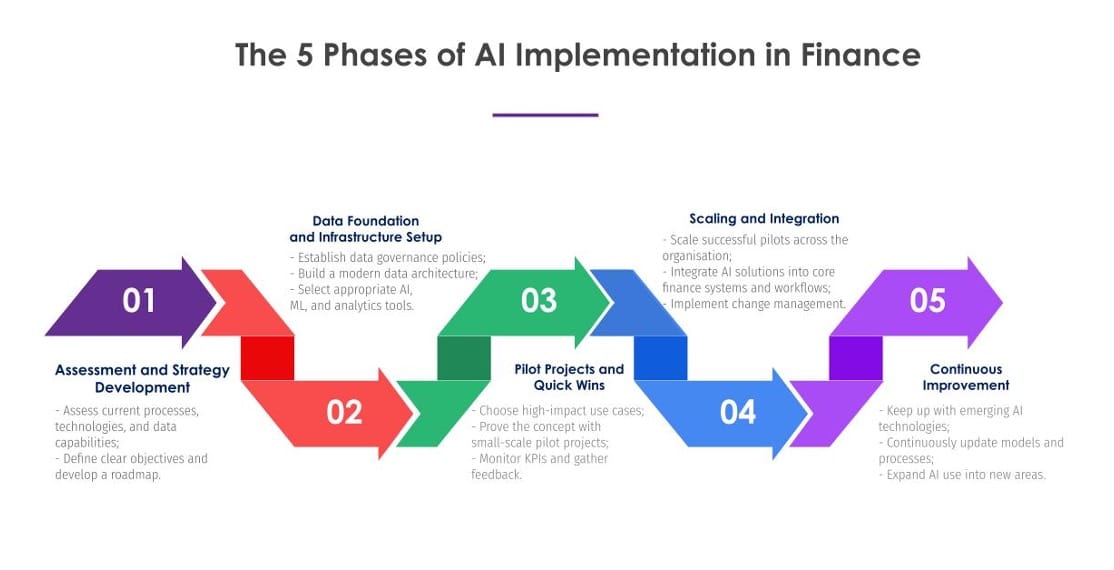
| Phase | Key Focus | Primary Risk |
|---|---|---|
| Audit | Data integrity | Incomplete datasets |
| API Integration | Secure connectivity | Latency or downtime |
| Governance | Rule definition | Over-restriction |
| Deployment | Performance monitoring | Model drift |
No comments yet. Be the first to share your thoughts!