The shift to on-chain treasuries 2026
The year 2026 marks a structural inflection point for institutional treasury management. Regulatory clarity has moved from experimental frameworks to established compliance pathways, allowing traditional finance institutions to integrate digital assets with the same rigor applied to legacy markets. This shift is driven by the maturation of tokenized real-world assets, which now offer a viable alternative for liquidity management and yield generation.
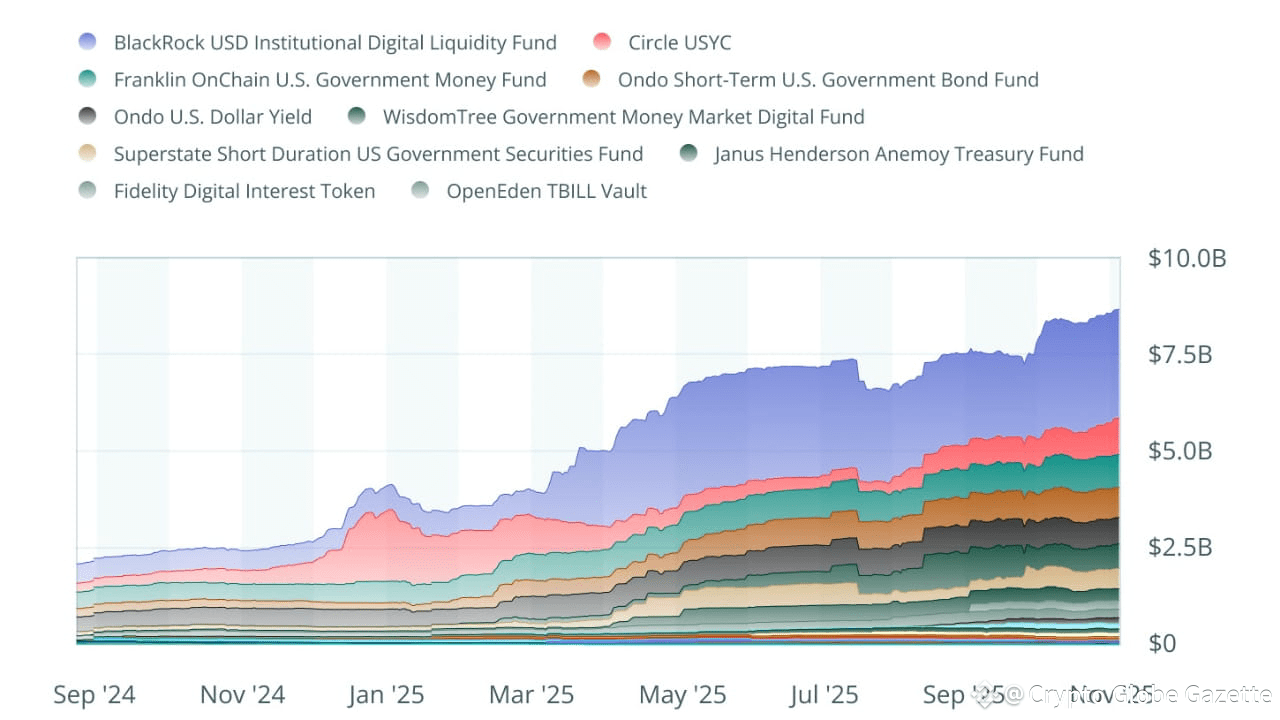
The scale of adoption is evident in current market data. According to RWA.xyz, the total value of tokenized U.S. Treasuries and related RWAs has reached approximately $15.35 billion. This figure represents a significant accumulation of capital, reflecting growing confidence among treasury managers in the security and efficiency of on-chain settlement. The segment is no longer a niche experiment but a substantive component of modern balance sheets.
For CFOs and treasury managers, the appeal lies in the mechanics of utility and risk. Tokenized treasuries provide 24/7 settlement, reducing the friction and counterparty risk associated with traditional banking rails. With the U.S. Treasury yield curve forecast to steepen in 2026, the ability to access these yields instantly and transparently on-chain offers a competitive advantage. The infrastructure is now robust enough to support institutional-grade operations, making on-chain treasuries a pragmatic choice for 2026.
Understanding the current yield landscape
Institutional treasuries are no longer choosing between on-chain liquidity and traditional yields; they are merging the two. The core mechanic driving this shift is the ability to capture off-chain risk-free rates while maintaining the settlement advantages of blockchain infrastructure. For treasury managers, the objective is to replicate the yield of US Treasuries without sacrificing the operational efficiency that digital assets provide.
The yield environment for tokenized treasuries closely mirrors traditional money market funds, typically ranging between 4% and 5% APY in the current cycle. This parity is engineered through precise data feeds that translate off-chain interest accruals into on-chain value. Without reliable oracles, tokenized assets would trade at a discount or premium detached from their underlying cash flows. The integrity of the yield depends entirely on the accuracy and timeliness of these data streams.
Providers like Pyth Network have launched dedicated rates feeds, bringing US Treasury yield data directly on-chain across various maturities. This infrastructure allows smart contracts to adjust token prices or distribute yields in real-time, reflecting the true cost of money. CFOs must verify that their treasury infrastructure relies on these primary data sources rather than aggregated or secondary estimates to avoid basis risk.
To visualize the broader macro environment influencing these yields, consider the trajectory of the 10-year US Treasury yield. The yield curve's shape dictates the opportunity cost of holding short-term tokenized instruments versus longer-duration assets.
The 2026 market outlook suggests a steepening yield curve, with forecasts pointing toward a 3.75% yield for the 10-year note and 3.12% for the 3-month bill. This structural shift impacts how treasuries allocate capital. Tokenized short-term treasuries remain attractive for their liquidity, but the widening spread between short and long rates may incentivize rolling positions into slightly longer maturities where yield pickup is more pronounced.
Leading platforms for tokenized treasuries
Institutional adoption of on-chain treasuries relies on infrastructure that satisfies strict custody, compliance, and interoperability requirements. The market is currently dominated by a few specialized providers who have secured regulatory clarity and traditional banking partnerships. Comparing these platforms requires looking beyond yield to assess the underlying legal wrappers and custodial safeguards.
The following table compares the primary infrastructure providers enabling on-chain treasury management. These platforms differ in their regulatory jurisdictions, custody solutions, and minimum investment thresholds, which directly impact their suitability for institutional capital.
| Provider | Custody Solution | Regulatory Status | Min. Investment |
|---|---|---|---|
| BlackRock (BUIDL) | State Street | SEC Registered Money Market Fund | $100,000 |
| Ondo Finance (USDY) | BNY Mellon | SEC Regulation D (Accredited) | $5,000 |
| Franklin Templeton (FOBXX) | Fireblocks | SEC Registered Money Market Fund | $1,000 |
| Sygnum (Desygnate) | Custodian Partners | FINMA Licensed (Switzerland) | $10,000 |
BlackRock’s BUIDL fund represents the largest entry in the sector, leveraging its existing relationship with State Street for custody. This structure provides a familiar regulatory wrapper for traditional asset managers, though the $100,000 minimum investment threshold limits accessibility for smaller treasury desks. Similarly, Franklin Templeton utilizes Fireblocks for digital asset custody, combining traditional fund registration with modern blockchain distribution.
Ondo Finance and Sygnum cater to different institutional profiles. Ondo’s USDY is structured under SEC Regulation D, restricting participation to accredited investors but offering a lower entry point. Sygnum, operating out of Switzerland, provides a cross-border solution for European entities navigating complex regulatory landscapes. The choice between these platforms often depends on the treasury’s specific jurisdictional constraints and risk appetite.
Risk management and compliance checks
On-chain treasury management shifts the burden of custody and compliance from intermediaries to the protocol itself. For institutional CFOs, this transition requires a rigorous due diligence framework that addresses smart contract vulnerabilities, oracle reliability, and evolving regulatory clarity. Unlike traditional banking, where a central entity absorbs counterparty risk, on-chain assets expose the treasury to code-level failures and data feed manipulations.
Smart contract risk remains the primary non-market threat. Even audited protocols can contain undiscovered vulnerabilities that lead to total loss of funds. Institutions must prioritize assets built on battle-tested architectures with transparent, immutable codebases rather than novel, unaudited implementations. This principle extends to the data layers that price these assets.
Oracle reliability is equally critical. Tokenized assets and stablecoins depend on accurate price feeds to maintain pegs and trigger liquidations. If an oracle feed is manipulated or delayed, the treasury’s collateral value can be incorrectly assessed, leading to unintended liquidations or settlement failures. Relying on decentralized oracle networks like Chainlink or Pyth, which aggregate data from multiple independent sources, reduces the risk of single-point data failure.
Regulatory clarity is the final pillar. As the US Treasury faces a $10 trillion maturity wall in 2026, the intersection of traditional fixed income and blockchain technology will attract intense regulatory scrutiny. CFOs must ensure that their on-chain activities comply with existing securities laws and emerging digital asset regulations. This includes verifying the legal status of tokenized assets and the licensing of any custodial or trading partners involved in the transaction lifecycle.
Migrating treasury assets on-chain
Transitioning a portion of the corporate treasury to on-chain assets requires a phased approach to manage liquidity and counterparty risk. CFOs should begin with a pilot program, allocating 1-5% of reserves to stablecoins or tokenized treasuries via regulated issuers. This initial step tests operational workflows without exposing the balance sheet to significant volatility.
1. Audit and Compliance
Before deployment, conduct a rigorous audit of smart contracts and custody solutions. Verify that the blockchain infrastructure meets institutional security standards, including multi-signature requirements and hardware security modules (HSMs). Establish internal governance policies that define approval thresholds for on-chain transactions.
2. Select Custody and Issuer
Partner with regulated custodians and primary issuers of tokenized real-world assets. Chainlink’s research highlights that onchain treasuries rely on distributed ledger technology and smart contracts to automate yield generation and settlement. Ensure the issuer provides transparent proof of reserves and complies with local securities regulations.
3. Execute Pilot Transactions
Execute small-scale transactions to test settlement speed and fee structures. Monitor the yield curve impact, as the 2026 forecast suggests a steepening curve with 3-month rates at 3.12% and 10-year rates at 3.75%. Compare the net yield of tokenized assets against traditional money market funds after accounting for gas fees and custody costs.
4. Scale and Integrate
Once the pilot demonstrates operational reliability, scale the allocation gradually. Integrate on-chain assets into the existing treasury management system (TMS) for unified reporting. Use provider-backed widgets to monitor real-time prices and technical indicators, ensuring liquidity remains sufficient for daily operational needs.
Frequently asked questions on on-chain treasuries
What is the Treasury forecast for 2026?
Market outlooks for 2026 suggest a steepening yield curve, with the 3-month rate expected to settle around 3.12% and the 10-year rate rising to approximately 3.75% [Transamerica Center for Retirement Studies]. For on-chain treasuries, this shift impacts the baseline yield available to tokenized holders. Platforms tracking Real-World Assets currently display a 7-day APY of roughly 3.15% on a total value of $10 billion [RWA.xyz]. This baseline yield serves as the floor for on-chain treasury products, with premium yields often derived from liquidity incentives or specific protocol mechanics rather than the underlying bond coupon alone.
How much US Treasury bonds are maturing in 2026?
The United States faces a significant maturity wall in 2026, with approximately $10 trillion in Treasury securities coming due [U.S. Department of the Treasury]. This massive refinancing requirement drives the need for efficient capital markets. On-chain treasuries address this by offering a fractionalized, liquid alternative to traditional bond markets, allowing institutions to manage duration risk more dynamically. The sheer volume of maturing debt underscores the structural demand for stable, short-duration yield instruments that digital asset treasuries can provide.
Where can you buy tokenized assets?
Institutional investors typically access tokenized treasuries through regulated platforms that bridge traditional finance and blockchain infrastructure. Providers like Sygnum offer primary market subscriptions via issuance platforms such as Desygnate, as well as secondary trading on dedicated marketplaces like SygnEx [Sygnum]. Other channels include established crypto-native exchanges and specialized RWA protocols that partner with traditional custodians. When selecting a platform, CFOs should prioritize entities with clear compliance frameworks, transparent reserve audits, and integration with existing treasury management systems.
No comments yet. Be the first to share your thoughts!