Defining on-chain treasuries 2026
On-chain treasuries 2026 marks the operational shift of holding and managing corporate liquidity on distributed ledgers. Rather than relying solely on traditional bank accounts and short-term commercial paper, corporations are increasingly using Bitcoin and tokenized real-world assets (RWAs) to manage their balance sheets. This approach combines the store-of-value properties of digital assets with the yield generation of tokenized government debt.
The strategy creates a dual-layer liquidity model. Bitcoin serves as a non-sovereign reserve asset, while tokenized U.S. Treasuries provide immediate, programmable yield. According to data from RWA.xyz, the total value of tokenized treasury assets has reached approximately $10 billion, with yields hovering around 3.15% as of early 2026. This segment represents a significant portion of the broader on-chain asset landscape, offering corporations a way to earn yield on idle cash without sacrificing the liquidity needed for daily operations.
This shift is not merely about adopting new technology; it is about reclaiming control over corporate cash. By moving reserves on-chain, companies reduce reliance on intermediaries, settle transactions in minutes rather than days, and gain real-time visibility into their asset positions. The result is a treasury function that is more agile, transparent, and resilient to traditional financial system friction.
Bitcoin as the new reserve asset
Corporate treasuries are undergoing a structural shift, moving beyond traditional cash and short-term government bonds toward Bitcoin as a core reserve asset. This transition is driven by the need to hedge against inflation and currency debasement, challenges that have eroded the purchasing power of fiat holdings over the past decade. Unlike traditional cash, which loses value during periods of high inflation, Bitcoin’s fixed supply cap offers a mathematical guarantee of scarcity that appeals to CFOs seeking long-term value preservation.
The adoption of Bitcoin in corporate treasuries is not merely a speculative gamble but a strategic defense mechanism. Companies like MicroStrategy have demonstrated that holding Bitcoin can serve as a powerful store of value, outperforming traditional cash equivalents over multi-year horizons. This approach allows corporations to protect their balance sheets from the silent erosion caused by expansive monetary policies and central bank liquidity injections.
However, integrating Bitcoin into treasury operations introduces new complexities. The asset’s volatility requires robust risk management frameworks, and companies must navigate regulatory uncertainties that vary by jurisdiction. Despite these challenges, the trend is gaining momentum as more firms recognize the potential for Bitcoin to serve as a hedge against systemic financial risks.
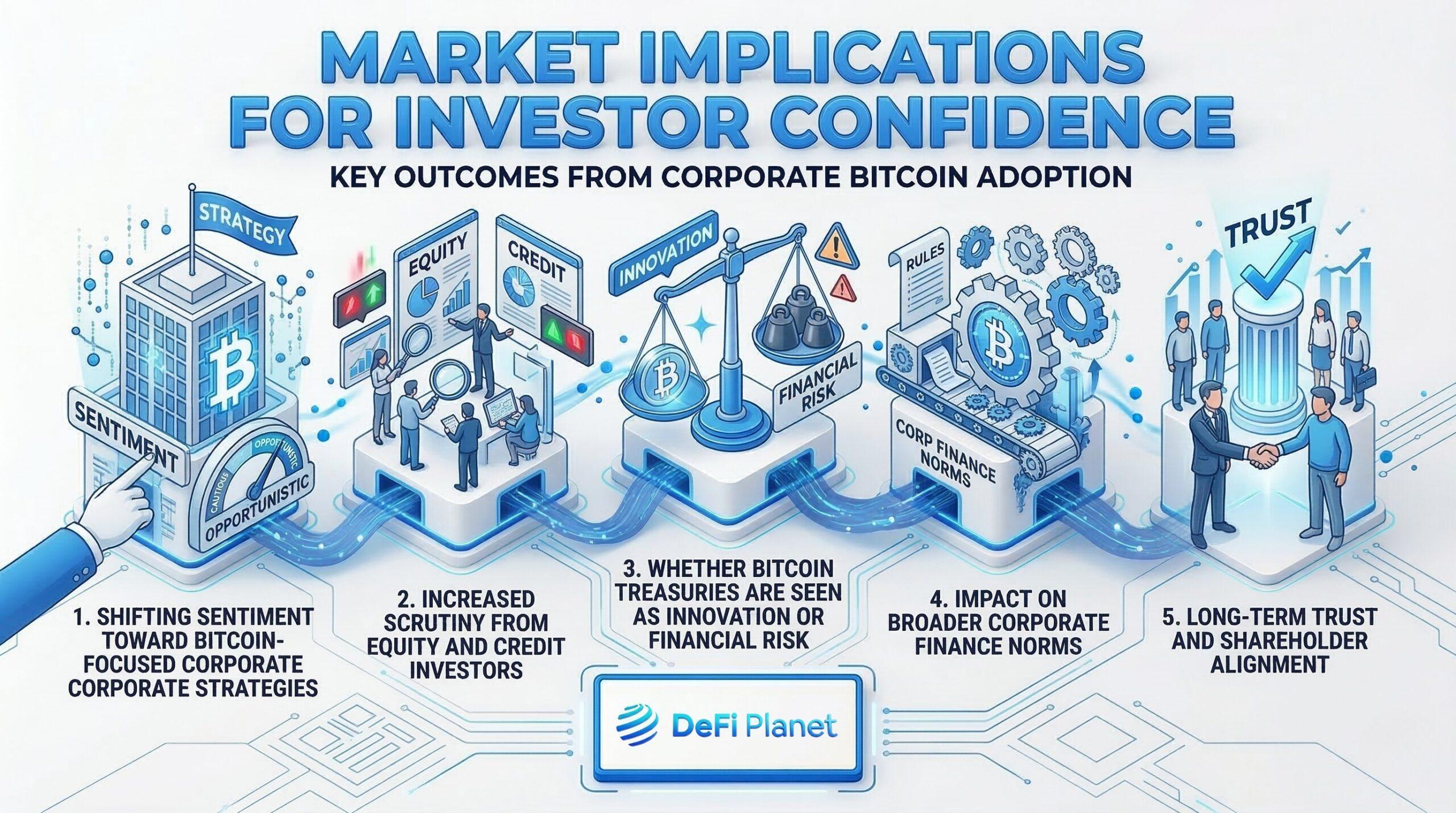
The move toward Bitcoin as a reserve asset reflects a broader rethinking of economic defense in the crypto age. As corporations seek to diversify their holdings and mitigate inflationary risks, Bitcoin offers a unique proposition: a decentralized, borderless, and scarce asset that operates outside the traditional financial system. This shift is not just about adding a new asset class; it is about redefining what constitutes a secure and resilient treasury strategy in an increasingly volatile global economy.
Tokenized treasuries for yield
Tokenized U.S. Treasuries and on-chain money market funds have become the standard for corporate cash management in 2026. These instruments allow companies to earn yield on idle reserves while keeping capital accessible on the blockchain. Instead of waiting days for traditional bank settlements, corporations can now move funds and realize returns in near-real-time.
The market has matured significantly, with total value locked in tokenized treasuries reaching approximately $10 billion as of early 2026 [src-serp-6]. Front-end yields on these tokenized money market funds tracked between 4.0% and 4.5% in the first quarter, closely mirroring short-dated U.S. Treasury rates rather than speculative crypto premiums [src-serp-8]. This stability makes them attractive for treasury departments prioritizing capital preservation alongside liquidity.
To understand how these on-chain assets compare to traditional corporate cash tools, consider the following breakdown of key performance metrics:
| Feature | Tokenized Treasury | Traditional Treasury | On-Chain Money Market |
|---|---|---|---|
| Settlement Speed | Near-real-time | T+1 to T+2 | Near-real-time |
| Yield Source | U.S. Govt Debt | Bank Deposits | Short-Term Treasuries |
| Accessibility | 24/7 Global | Business Hours | 24/7 Global |
| Minimum Investment | Low (Fractional) | High | Low (Fractional) |
The primary advantage lies in accessibility and speed. Traditional corporate treasuries often require business hours and involve multi-day settlement cycles, tying up capital unnecessarily. Tokenized alternatives operate 24/7, allowing treasury managers to deploy capital instantly across global markets. This efficiency reduces the opportunity cost of idle cash, a critical factor for corporations managing large, fluctuating reserve balances.
Smart contracts and automated liquidity
The shift to on-chain treasuries relies on smart contracts to replace manual treasury operations. These self-executing code protocols automate liquidity management, ensuring funds are deployed or rebalanced according to pre-set rules without human intervention. This automation reduces counterparty risk by removing intermediaries from routine transactions and enables near-instant cross-border payments.
Smart contracts function as digital escrow agents. Instead of relying on traditional banking rails that can take days to settle, corporate treasuries can use tokenized real-world assets (RWAs) and distributed ledger technology to move value globally. This infrastructure allows for real-time visibility into reserve positions, turning static cash holdings into dynamic, yield-generating assets.
The integration of these tools is gaining traction among financial executives who see digital assets as a strategic priority. By embedding liquidity management directly into the balance sheet, corporations can respond to market opportunities faster than traditional banking systems allow, effectively turning their treasuries into programmable financial engines.
Regulatory clarity and risk management
The transition to on-chain corporate treasuries in 2026 is no longer just a technological experiment; it is a compliance imperative. As corporations move reserves onto distributed ledgers, the regulatory landscape has shifted from ambiguous guidance to structured enforcement. The primary focus for treasury teams is no longer just asset acquisition, but proving solvency and maintaining audit trails that satisfy both traditional financial reporting standards and blockchain-native transparency requirements.
Proof of reserves as a standard
Proof of reserves has evolved from a marketing tactic for crypto exchanges into a foundational requirement for corporate balance sheets. In 2026, major treasury frameworks require real-time or near-real-time verification of on-chain assets. This is not merely about showing that funds exist; it is about demonstrating that those funds are liquid, unencumbered, and accessible for operational needs. The mechanism relies on cryptographic proofs that link on-chain balances to off-chain audited financial statements, creating a bridge between Web2 accounting and Web3 execution.
Proof of Reserve mechanisms are becoming standard for on-chain treasuries 2026, ensuring transparency and auditability for corporate stakeholders.
Audit trails and compliance
Traditional quarterly audits are too slow for the velocity of on-chain transactions. Consequently, continuous auditing tools are being integrated directly into treasury management systems. These tools monitor smart contract interactions and token movements, flagging anomalies that deviate from established risk parameters. This level of scrutiny ensures that compliance with financial reporting standards, such as those from the SEC or international equivalents, is maintained without sacrificing the efficiency gains of blockchain technology.
Risk management in a decentralized environment
Risk management in on-chain treasuries requires a dual-layer approach. First, there is the technical risk of smart contract vulnerabilities, which is mitigated through rigorous code audits and multi-signature wallets. Second, there is the regulatory risk of changing laws, which is managed by maintaining a clear, immutable record of all transactions. This record serves as the primary source of truth for regulators, reducing the friction of compliance checks and allowing corporations to operate with greater confidence in a rapidly evolving digital asset ecosystem.
No comments yet. Be the first to share your thoughts!