
The 2026 corporate bitcoin treasury shift
The corporate bitcoin treasury model has graduated from speculative novelty to a recognized reserve asset class. By 2026, the strategy is defined by long-duration holding and balance sheet optimization rather than short-term trading. Companies are treating bitcoin as a hedge against currency debasement and a diversification tool for institutional capital.
This shift is driven by the realization that bitcoin’s fixed supply offers a counterweight to traditional fiat expansion. Treasuries are no longer buying to flip; they are buying to hold. This structural change stabilizes demand and reduces the volatility impact of corporate entries and exits on the broader market.
Investor sentiment supports this long-term view. Surveys indicate that corporate participants expect their bitcoin balances to grow significantly throughout 2026. The consensus is clear: companies are buying in size and holding for years. This marks a fundamental departure from the earlier era of opportunistic, small-cap entries.
As these holdings mature, the focus is shifting toward operational efficiency and strategic alignment. Bitcoin is becoming a standard component of the corporate reserve toolkit, alongside gold and cash equivalents. The trend signals a permanent integration of digital assets into mainstream corporate finance.
Market leaders and treasury scale
Corporate adoption of Bitcoin has moved from experimental pilot projects to a structural component of balance sheet management. As of April 2026, publicly traded companies collectively held approximately 1.16 million BTC, a figure that represents a significant portion of the total circulating supply.
This scale transforms Bitcoin from a speculative asset into a recognized reserve standard. The market cap of these corporate treasuries rivals that of many mid-cap equities, signaling that institutional capital is no longer just observing the asset but actively accumulating it as a hedge against fiat debasement.
The concentration of holdings among a few major players highlights the strategic advantage of early adoption. Strategy (formerly MicroStrategy) remains the dominant force, holding more than 815,000 BTC. This single entity accounts for over 60% of all Bitcoin held by publicly traded companies, effectively setting the benchmark for the entire sector.
Other major holders include Bit Digital and Block, each maintaining substantial reserves. The following comparison illustrates the disparity in scale between the market leader and other significant corporate adopters.
| Company | Ticker | BTC Held | Share of Public Holdings |
|---|---|---|---|
| Strategy | MSTR | 815,000+ | >60% |
| Bit Digital | BTBT | ~15,000 | ~1.3% |
| Block | XYZ | ~10,000 | ~0.9% |
| GameStop | GME | ~5,000 | ~0.4% |
How corporate Bitcoin treasuries work
Corporate Bitcoin treasury strategies move beyond simple spot ETF purchases. Public companies are now integrating Bitcoin directly into their balance sheets using mechanisms that function more like sovereign reserve management than retail investing. These strategies rely on three core pillars: acquisition, financing, and security.
Acquisition and financing
Companies acquire Bitcoin through three primary channels. Direct spot purchases involve buying on exchanges or through over-the-counter (OTC) desks to minimize market impact. Some firms, like Strategy (formerly MicroStrategy), have issued convertible debt to leverage low interest rates for Bitcoin accumulation. Others, such as GameStop, have utilized equity offerings to raise capital specifically for treasury reserves. This approach transforms Bitcoin from a speculative asset into a funded reserve asset.
Cold storage and multi-signature security
Holding Bitcoin requires institutional-grade security. Unlike ETFs, where a custodian holds the asset, treasury companies manage the private keys themselves. Most adopt multi-signature (multi-sig) wallets, requiring multiple authorized parties to approve transactions. This prevents single points of failure. Companies often use cold storage solutions, keeping the majority of their holdings offline to protect against hacks. This level of control is necessary for companies treating Bitcoin as a long-term store of value.
Differentiation from ETFs
The distinction between a corporate treasury and an ETF is fundamental. An ETF allows investors to gain exposure to Bitcoin's price without holding the asset. A corporate treasury company holds the actual Bitcoin. This means the company benefits from the asset's potential appreciation directly, but also bears the responsibility of security and custody. This model exposes the company's valuation to Bitcoin's volatility in a more direct way than an ETF fund.
The Binary Nature of Corporate Bitcoin Treasuries
A corporate Bitcoin treasury strategy is not a passive holding pattern; it is a leveraged bet on long-term appreciation. The financial structure is binary: if Bitcoin appreciates, the company’s balance sheet strengthens, often unlocking further equity or debt capacity. If it depreciates, the same leverage that amplified gains now threatens solvency. This is not merely an investment decision but a fundamental shift in corporate risk management.
The primary danger lies in the mismatch between Bitcoin’s volatility and corporate debt obligations. Unlike traditional reserve assets like gold or foreign exchange reserves, Bitcoin can experience double-digit percentage drops in days. When companies finance these purchases through convertible debt or equity dilution, a prolonged bear market creates a liquidity trap. The company must either sell Bitcoin at a loss to service debt or face a margin call that forces liquidation at the worst possible time. This dynamic was evident in the broader Digital Asset Treasury (DAT) correction, where highly leveraged firms faced existential threats purely from price action.
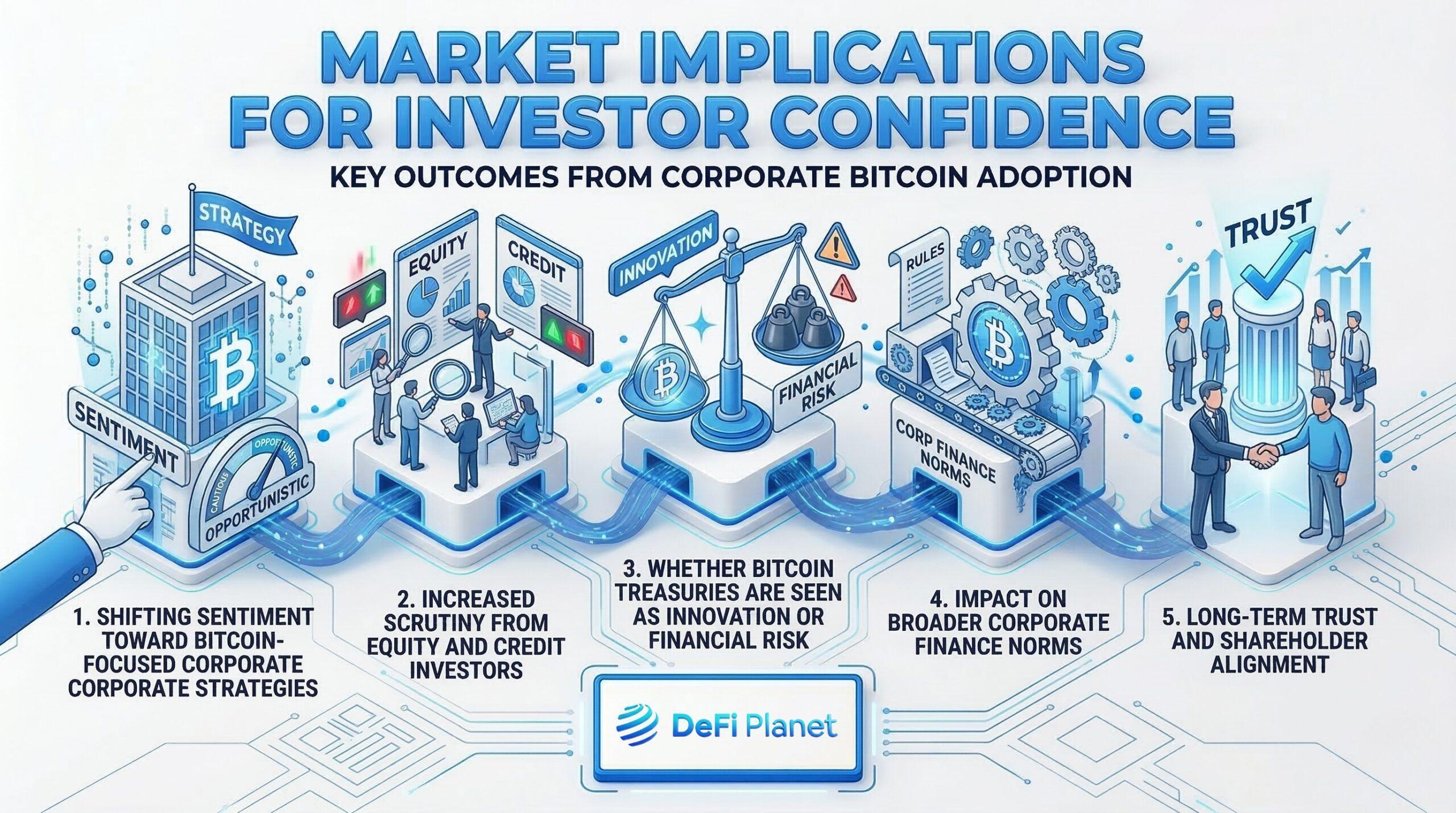
Investor sentiment in 2026 reflects this high-stakes reality. Surveys indicate that while investors expect corporate Bitcoin balances to rise, they are increasingly scrutinizing the financing methods behind these acquisitions. Companies are buying in larger sizes and holding for years, but the market is no longer rewarding blind adoption. The success of a Bitcoin treasury company now hinges on its ability to navigate extreme volatility without triggering a debt crisis. As one analysis from Natixis noted, the strategy hinges entirely on Bitcoin's appreciation; should the cryptocurrency underperform, a company could be faced with significant debt and eroding investor confidence.
The viability of this strategy depends on the company’s time horizon and risk tolerance. Short-term traders view Bitcoin treasury stocks as volatile proxies for the asset itself, while long-term holders view them as strategic reserve managers. The line between the two is thin, and a single major market downturn can blur it entirely. Companies must treat Bitcoin not as a speculative asset but as a core reserve component, requiring rigorous stress testing and conservative leverage limits.
Frequently asked questions about corporate Bitcoin treasuries
Which companies hold Bitcoin in their treasury?
Strategy (MSTR) and Bit Digital (BTBT) are established examples of firms that have integrated Bitcoin into their balance sheets. Block (XYZ) also participates in this space. Notably, GameStop (GME) announced in March 2025 that it would add cryptocurrency to its treasury reserves by issuing convertible debt, causing its stock to jump initially.
What is the Bitcoin price forecast for 2026?
Aggregated market forecasts suggest Bitcoin could trade between $72,145 and $109,201 by August 2026, with an average target around $90,673. Current market sentiment remains balanced as the asset navigates this projected range. We recommend monitoring live market data for real-time updates rather than relying solely on static predictions.
Are Bitcoin treasury companies a good investment?
The model offers compelling opportunities but carries inherent risks. The strategy depends heavily on Bitcoin’s appreciation; if the cryptocurrency underperforms, companies may face significant debt burdens and eroding investor confidence. Investors should evaluate these risks against potential upside before allocating capital to such entities.
No comments yet. Be the first to share your thoughts!