


DAOs stand at a pivotal crossroads in treasury management, where the volatility of crypto staking meets the reliability of real-world asset yields. Imagine harvesting Ethereum staking rewards at today’s price of $2,125.52, then channeling them into tokenized U. S. Treasury bills offering 5.2% to 7.1% APY. This isn’t just theory; it’s a pragmatic strategy powering forward-thinking protocols like MakerDAO, which derives nearly 80% of its fee revenue from $1.14 billion in Treasury bonds.

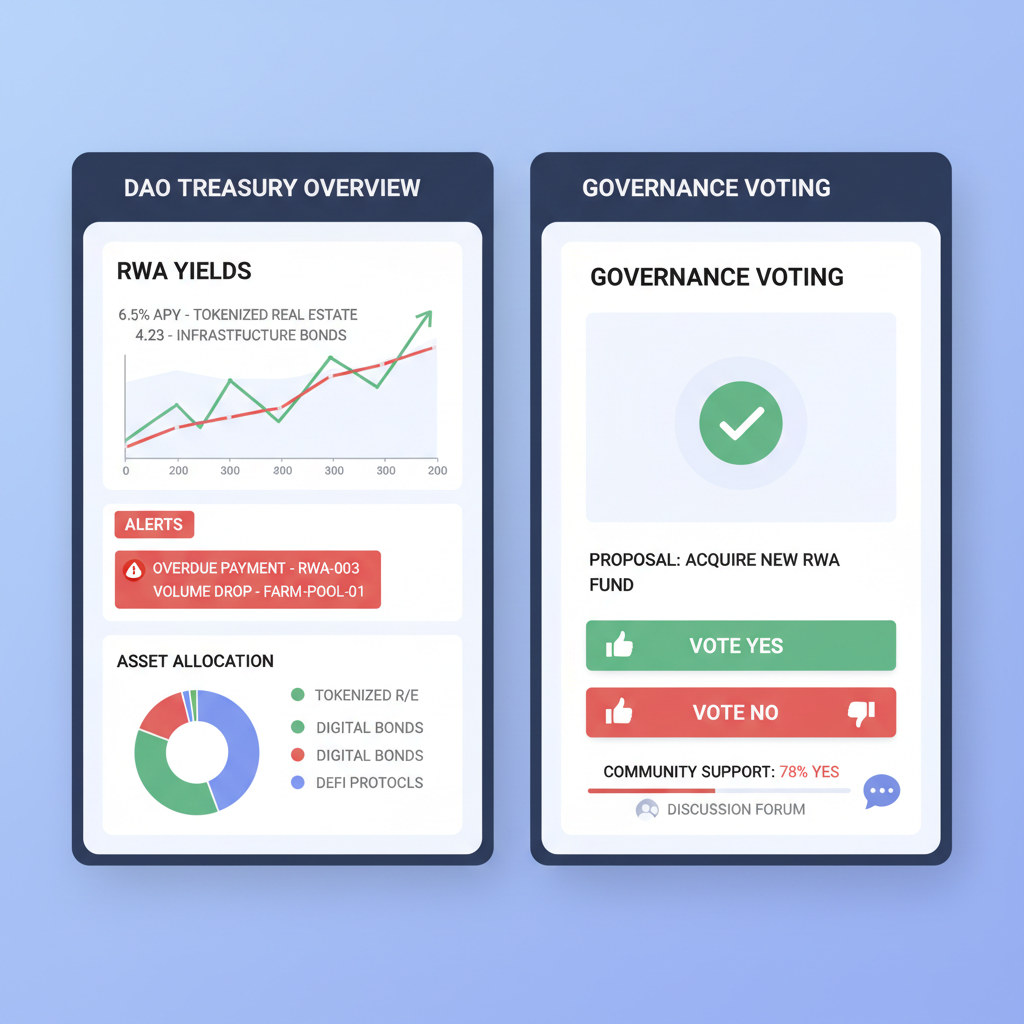
Forward-thinking treasury teams recognize staking vault harvests as more than passive income generators. They represent a dynamic funding mechanism for RWA DAO treasury management, especially as DeFi yields lag behind traditional assets. Platforms like Landshare exemplify this shift, empowering their DAO with direct governance over staking rewards distribution from newly minted LAND tokens. Token holders vote on allocations to specific vaults, blending community input with on-chain treasury yield funding.
Staking Vaults as the Engine of DAO Growth
At the heart of this approach lie staking vaults, where DAOs lock native assets like ETH to earn compounding rewards. Ethereum’s staking, buoyed by its current $2,125.52 valuation, delivers yields that outpace many inflationary pressures. But the real ingenuity emerges in harvest automation: protocols trigger reward claims at optimal intervals, minimizing gas fees and maximizing efficiency.
Take Landshare’s model. Their treasury, secured in a multisig wallet, grants exclusive DAO control over issuance rates and reward splits. This Landshare treasury governance setup lets communities fine-tune incentives, directing harvests toward high-impact initiatives. I’ve seen DAOs thrive by capping vault exposure at 25% of total assets, ensuring liquidity while capturing upside. Gitcoin’s insights on USDC yield vaults underscore the need for seamless liquidity management, a lesson every DAO should internalize.
The Landshare DAO directly controls the proportion of newly minted LAND tokens allocated to each staking vault.
This collaborative governance fosters resilience. Unlike centralized funds, DAOs iterate publicly, adapting to market shifts like ETH’s recent 24-hour high of $2,194.68.
Bridging to Stablecoins: Taming Reward Volatility
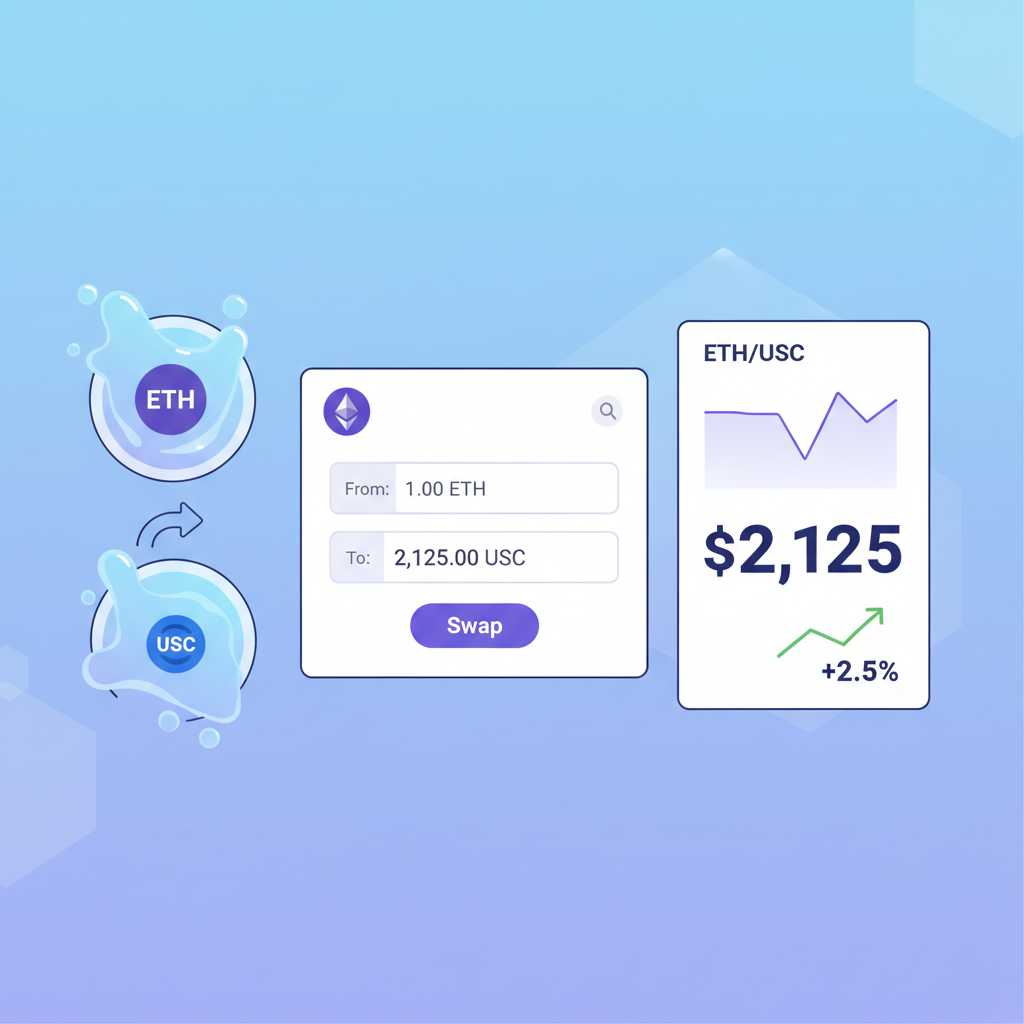
Raw staking rewards arrive laden with price risk, but savvy DAOs swiftly convert them to stablecoins. Picture auto-swapping ETH harvests into USDC or DAI via DEX aggregators, creating a volatility moat. Yet vigilance is key; witness Multichain Bridged USDC on Fantom at a precarious $0.02209988, a stark reminder of depegging pitfalls.
Here, stablecoin vaults DAO initiatives shine. These on-chain constructs pool funds for optimized yields, often integrating with RWA backings for added security. A deep dive into practices from Coinmetro reveals how DAOs allocate treasuries methodically: 40% in stables for ops, 30% in yield vaults, the rest diversified. LimeChain frames the treasury as the DAO’s financial backbone, and converting staking outputs fortifies it against downturns.
Opinion: Skip the hype around perpetual DeFi loops; stablecoin bridges offer cleaner paths to RWAs. Protocols automate this via keeper networks, harvesting and swapping in one fell swoop, preserving value at Ethereum’s steady $2,125.52 perch.
Ethereum (ETH) Price Prediction 2027-2032
Forecasts factoring DAO treasury strategies with staking vault harvests and RWA yield funding
| Year | Minimum Price | Average Price | Maximum Price | YoY % Change (Avg) |
|---|---|---|---|---|
| 2027 | $1,900 | $3,100 | $4,800 | +46% |
| 2028 | $2,800 | $4,500 | $7,200 | +45% |
| 2029 | $3,800 | $6,200 | $9,800 | +38% |
| 2030 | $5,000 | $8,300 | $13,000 | +34% |
| 2031 | $6,500 | $10,800 | $17,000 | +30% |
| 2032 | $8,000 | $13,800 | $21,500 | +28% |
Price Prediction Summary
Ethereum (ETH) is projected to see strong growth from 2027-2032, with average prices climbing from $3,100 to $13,800—a 6.5x increase from 2026 levels. This outlook is driven by DAO treasuries leveraging ETH staking rewards for RWA investments, enhancing utility and demand. Minimum prices reflect bearish scenarios like regulatory hurdles, while maxima capture bullish adoption surges.
Key Factors Affecting Ethereum Price
- DAO adoption of ETH staking vaults for RWA yield funding, increasing ETH demand and utility
- Staking rewards providing consistent treasury growth amid volatility
- RWA platforms like Ondo and MakerDAO boosting Ethereum as the settlement layer for tokenized assets
- Regulatory clarity on RWAs and DAOs fostering institutional inflows
- Ethereum upgrades (e.g., scalability improvements) supporting higher throughput
- Market cycles favoring bull runs in 2028-2030 with historical patterns
- Risks from competition, depegging events, and macro downturns incorporated in conservative min prices
Disclaimer: Cryptocurrency price predictions are speculative and based on current market analysis.
Actual prices may vary significantly due to market volatility, regulatory changes, and other factors.
Always do your own research before making investment decisions.
Channeling Funds into RWAs for Enduring Yields
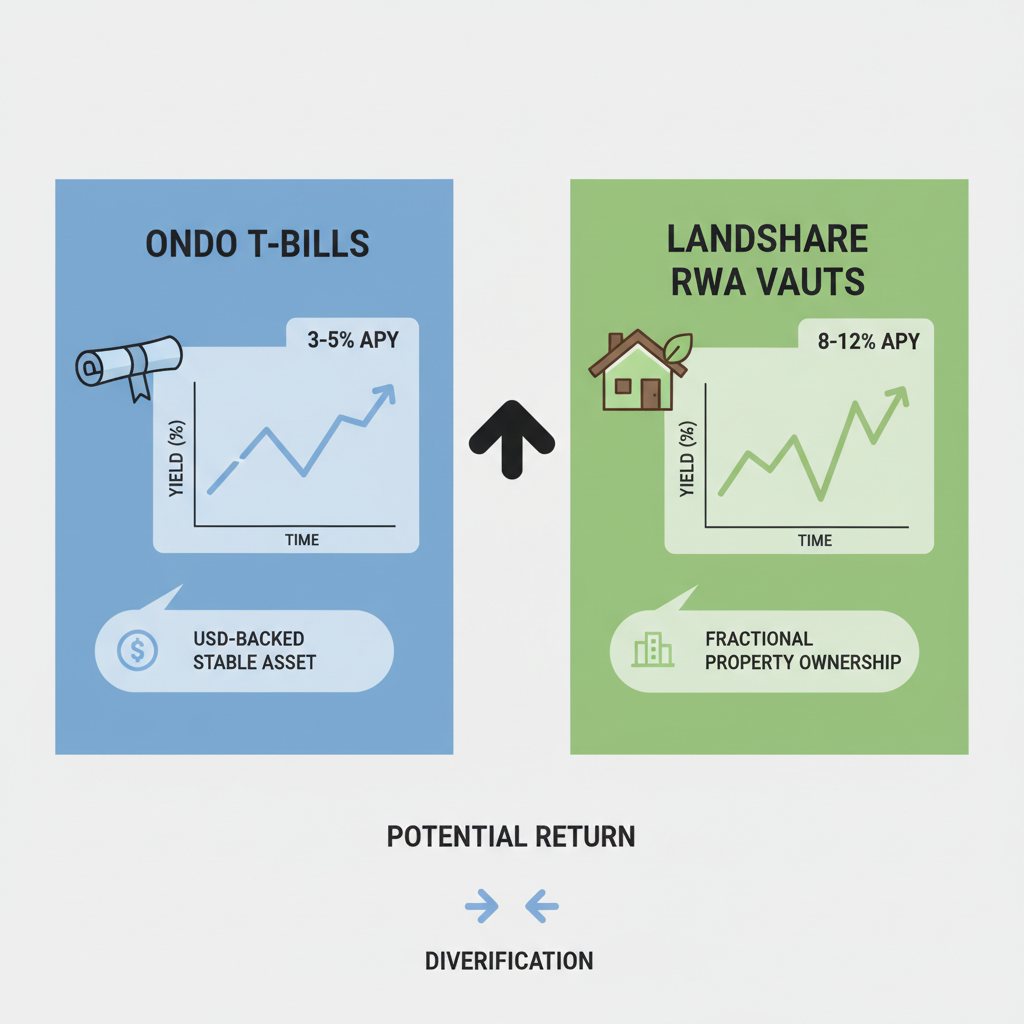
With stablecoins in hand, DAOs pivot to RWAs, where yields now eclipse DeFi benchmarks. ENS DAO forums highlight this reversal: RWAs lead with stable returns from tokenized Treasuries and real estate. Ondo Finance’s T-Bill vaults beckon at 5.2%-7.1% APY, while Landshare tokenizes property for governance-aligned exposure.
Landshare’s LAND token isn’t mere utility; it unlocks staking rewards, DAO votes, and premium RWA access. Their DAO treasury multisig enforces transparent deployments, a blueprint for RWA DAO treasury management. Gauntlet’s levered strategies amplify this: deposit RWAs as collateral, borrow stables, rebuy assets, all within 150% overcollateralization to dodge liquidations.
| Vault Type | APY Range | Risk Cap |
|---|---|---|
| Ethereum Staking | 3-5% | 25% Treasury |
| Ondo T-Bills | 5.2-7.1% | 20% Exposure |
| Landshare RWA | 6-8% | Governance-Voted |
Risk management elevates these plays. Regular audits, multisig controls, and diversification prevent single-point failures. As Ethereum holds at $2,125.52, this pipeline from vaults to RWAs positions DAOs for sustained growth amid market flux.
Landshare stands out as a prime example of Landshare treasury governance in action, where the DAO multisig wallet exerts precise control over treasury deployments and staking reward distributions. Token holders decide the flow of newly minted LAND tokens into vaults, funding everything from real estate tokenization to yield optimization. This model turns governance into a yield engine, directly tying community votes to on-chain treasury yield funding.
Yet success hinges on execution. DAOs must navigate liquidity nuances, as Gitcoin’s USDC yield vault analysis warns: poor management can snag withdrawals. ENS DAO discussions reinforce that RWAs now dominate yields, flipping the script on DeFi’s former edge. With Ethereum staking rewards flowing at $2,125.52 per ETH, the math favors this pivot.
Harvest ETH Rewards & Deploy to RWA Yields: DAO Treasury Guide


Leveraging Protocols for Automated Efficiency
Automation separates thriving DAOs from the pack. Keeper networks like those in Gauntlet handle harvests, swaps, and rebalancing, borrowing against RWAs to stack yields without manual intervention. Deposit into a levered vault, watch as it auto-adjusts to 150% collateral ratios, sidestepping liquidation risks even if Multichain Bridged USDC dips to $0.02209988.
Landshare amplifies this with LAND token utilities: stake for rewards, vote on allocations, pay fees. Their DAO previews on Medium paint a picture of seamless control, where treasury funds back premium RWA features. Pair this with stablecoin vaults for RWA backing, and you’ve got a resilient stack. I favor this over naked DeFi plays; the overcollateralization provides sleep-at-night security.
Podcasts like The Decentralized Podcast with Andrew unpack these tactics, stressing adaptability in volatile markets. Coinmetro’s deep dive echoes: treat the treasury as a living system, allocating dynamically across DAO treasury staking vaults.
Risks and Safeguards: Building DAO Resilience
No strategy thrives without guardrails. Cap RWA exposure at 20-25%, audit smart contracts quarterly, and enforce multisig thresholds. Overcollateralize aggressively, diversify across Ondo, Landshare, and Treasuries. Liquidity remains the silent killer; Gitcoin flags USDC vault pitfalls, urging clear withdrawal protocols.
These measures transform potential pitfalls into strengths. MakerDAO’s $1.14 billion RWA haul proves the payoff: stable revenue streams funding protocol upgrades. As ETH trades steadily at $2,125.52, with a 24-hour range from $2,038.88 to $2,194.68, timing harvests during upswings maximizes inflows.
Explore further with resources on stablecoin vault strategies, tailored for 2024’s landscape. Landshare’s issuance control and Binance’s RWA analysis signal 100-fold potential in real estate tokenization, but only for disciplined operators.
DAO treasuries evolve fastest when teams blend staking dynamism with RWA ballast. Harvest at Ethereum’s $2,125.52 anchor, stabilize via DEXes, deploy into vaults yielding 5.2-7.1%. Governance like Landshare’s ensures alignment, turning treasuries into self-sustaining powerhouses ready for blockchain’s next phase.
About the Author